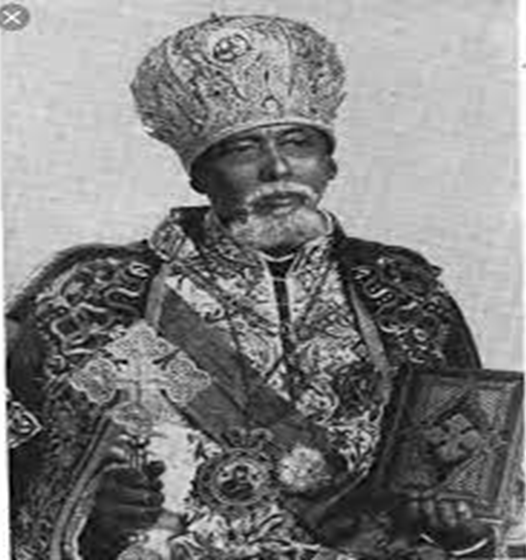
His Holiness Abune Basilios (1891–1970)
His Holiness Abune Basilios (23 April 1891–13 October 1970), Patriarch of the Ethiopian Orthodox Tewahedo Church, was born on 23 April 1891, in Mida Michael, Merha Bete District, North Shewa Zone, to his father Merigeta Wolde Tsadik Solomon (a respected ecclesiastical official) and his mother Weizero Welete Mariam Bayu (later known as Emahoy Welete Mariam). He was baptized at the age of forty days in the Kosso Maryam Church, near his family's home, and was given the Christian name Gebre Giyorgis.
When he reached the age for education, he received elementary education in his birthplace at the Kosso Maryam Church and was ordained as a deacon on 24 August 1905 at the age of 14 by the Egyptian Ethiopian Archbishop Mathews, continuing to serve the church. He then went to the great monastery of Debre Libanos, where he studied chanting (Zema), poetry (Qene), and interpretation of books under Memehr Gebre Yesus, and completed his studies in the Divine Liturgy under Aba Gebre Hiwot.
After completing his studies, His Holiness remained at Debre Libanos, where he served in the monastic order and deepened his understanding of monastic life. On August 29, 1913, at the age of 21, he was ordained as a monk. In 1914, he was ordained as a priest by the Egyptian Archbishop of Ethiopia, Abune Matewos. For the next 12 years, he served in the same monastery.
In 1917, by order of Queen Zewditu, he was assigned to oversee the construction of residences for the monks and nuns serving at the Church of St. Mary at the foot of Mount Menagesha, as well as to assist in the administration of the church. For three years, he remained in Menagesha, teaching the monks. During this mission, following the completion of the Church of Our Lady St. Mary built by Queen Zewditu, he was appointed Master of the Monastery (Abe Mnet) in 1924.
On March 6, 1932, he was appointed as the head of Menebere Mengest St. Gabriel Monastery of Addis Ababa by His Majesty Haile Selassie I, after he had taken up the position of teacher of the Menagesha Mariam Monastery. While diligently administering both holy places, he was appointed as the Head (Rais) of the Ethiopian Monasteries in Jerusalem in 1934. After two years of service, he returned to Ethiopia and, with the goodwill of His Majesty, on March 3, 1935, he was appointed as the 59th Echege of the Great Debre Libanos Monastery with the title "Blessed Head of Gebre Giorgis, who was seated in the see of Tekle Haymanot."
During his tenure as Echege, Ethiopia was invaded by Fascist Italy (1935–1941). His Holiness, together with other Church fathers, accompanied Emperor Haile Selassie and the Ethiopian troops to the Battle of Maychew, carrying the Ark of the Covenant and rallying the Ethiopian people: "O people of Ethiopia, stand firm in your faith, prayer, and fasting, for the enemy has come to burn our churches, destroy our sacred books, and annihilate the faithful!" Later, he went to Jerusalem, where he remained in exile until victory was achieved.
After the victory over the fascist Italian invasion, the Ethiopian Church and the government jointly began a dialogue in February 1942 to restore and continue the relationship with the Egyptian Church, which had been severed due to the invasion. However, the Egyptian Church refused to relinquish its traditional authority to appoint Ethiopian bishops. Following prolonged negotiations, His Holiness traveled to Cairo and, on July 25, 1948 , was consecrated by Patriarch Abune Yosab of Alexandria as "His Holiness Abba Basilios, Bishop of Shewa and Echege of Debre Libanos," alongside along with Abune Theophilos, Abune Mikael, Abune Ya’aqob, and Abune Timothewos.
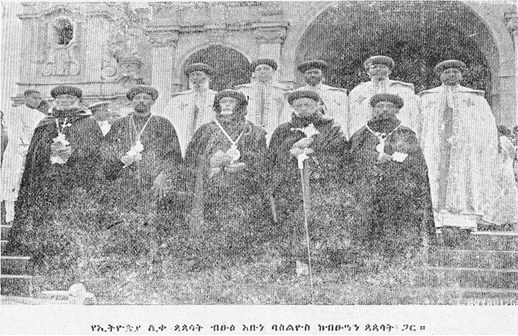
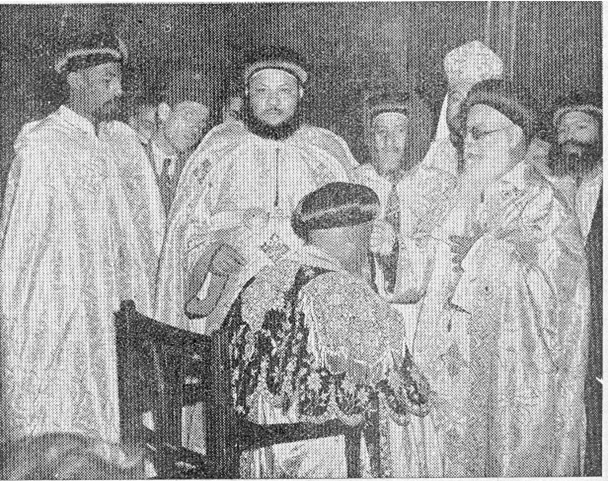
Four years later, after the repose of Pope Cyril VI of Alexandria, His Holiness Abune Basilios returned to Cairo and, in accordance with prior agreements, was received by Patriarch Abune Yosab II on January 14, 1951, becoming the first Ethiopian Archbishop. Subsequently, under the terms of the agreement between the Egyptian and Ethiopian Orthodox Churches, after 11 years of service, he was elevated to Patriarch on June 28, 1959, in a ceremony at St. Mark’s Cathedral in Cairo, officiated by Pope Cyril VI in the presence of Emperor Haile Selassie I. Thus, he became the first Ethiopian Patriarch of Ethiopian Orthodox Tewahedo Church with the rank of: "His Holiness Abune Basilios, Patriarch of Ethiopian Orthodox Tewahedo Church." This historic event marked Ethiopia’s full ecclesiastical independence, making him the first Ethiopian Patriarch in the Church’s 1,600-year history.
During his tenure, His Holiness Abune Basilios rendered extraordinary service to the Church:
- Established 42 churches
- Expanded 12 spiritual schools
- Founded the Evangelical Association (1956) to accelerate missionary work
- Strengthened the Church’s ties with the global Christian community
- Ordained 17 bishops
- Increased the number of the Church's dioceses to sixteen.
- Built numerous of the church buildings and residential villas.
In recognition of his distinguished service, he was awarded the Order of the Star of Honor, an honor inaugurated by His Majesty Emperor Haile Selassie I (1930–1974).
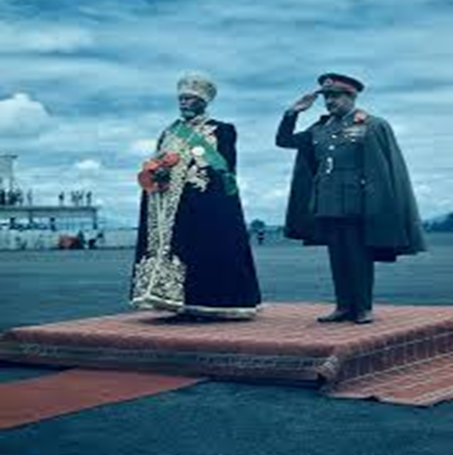
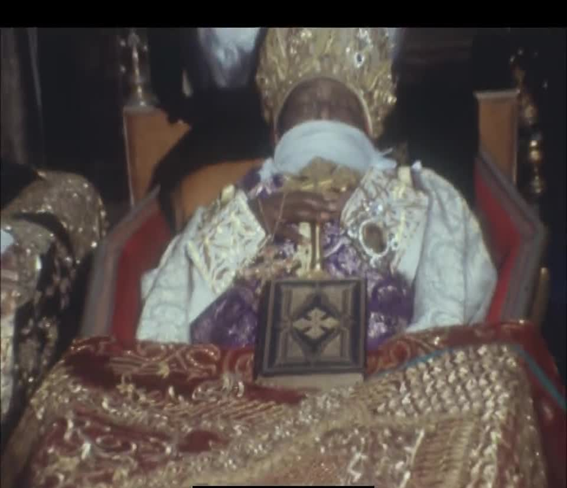
In his later years, as his health declined, he devoted himself to prayer and spiritual guidance at Debre Libanos Monastery. Finally, His Holiness passed away on October 2, 1970, at the age of 79, and was buried on October 4 at Debre Libanos in the presence of Emperor Haile Selassie, government officials, and representatives of other churches. His Holiness Abune Basilios is honored in the history of the Ethiopian Orthodox Tewahedo Church for his contributions to the country and the church, and is remembered for his commitment to the faith.
Currently, at the initiative of His Eminence Abune Kelemntos, Archbishop of Ethiopian Orthodox Tewahedo Church, Sunday Schools’ Department, North Shewa Diocese, founder and Head of St. Basilios Theological College a theological college named after His Holiness Abune Basilios has been opened in his honor. The college admits students from each diocese who meet the requirements to study in Theology, Law, Tourism, and Heritage Management, and is teaching them on a regular and continuous education Thus, it is certain that the college will contribute to the development of educated human resources, producing additional scholars for our Holy Church.
Source: Mersae Hazen Wolde Kirkos.(1956). The first Patriarch of the Ethiopian Church [EOTC] 1951. Addis Ababa: Birhanna Selam Printing press.